


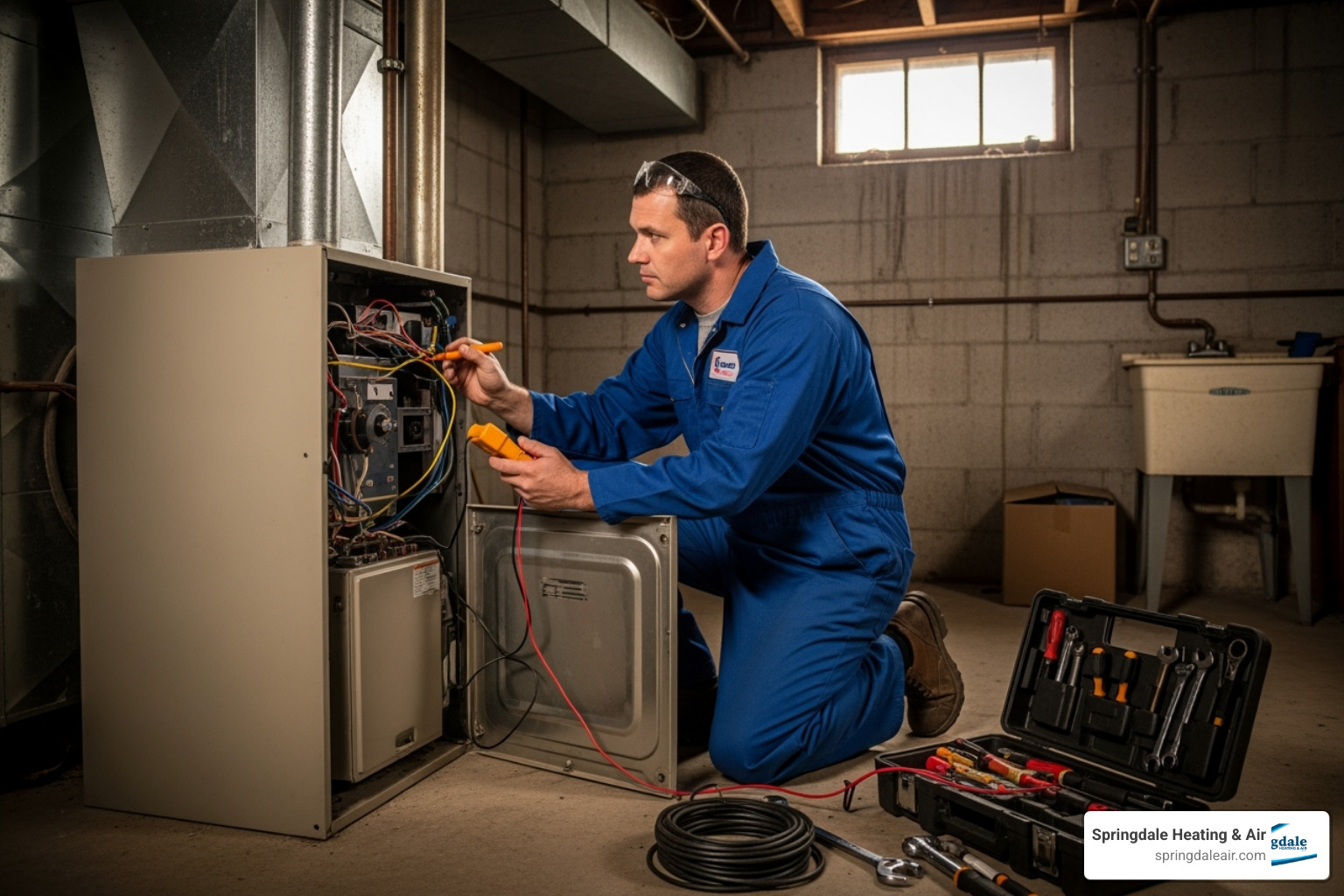
When Your Heat Goes Out: Understanding Emergency Heating System Repair
When your emergency heating system repair becomes urgent, you need help fast. Nothing disrupts your home comfort like a heating system that stops working during cold weather.
Quick Answer: Signs You Need Emergency Heating System Repair
- No heat coming from vents despite thermostat settings
- Strange noises like banging, grinding, or screeching sounds
- Gas or burning smells that weren’t there before
- Water leaking around your furnace or heating unit
- Yellow pilot light instead of blue (gas furnaces)
- Carbon monoxide detector going off
As the research shows, “when your furnace breaks down, it’s often at the worst possible time, like during a cold snap or holiday.” This isn’t just bad luck – heating systems work hardest when temperatures drop, putting extra strain on aging components.
The reality is simple: heating emergencies don’t wait for convenient times. They happen on weekends, holidays, and in the middle of the night when you need warmth most.
Your family’s comfort and safety depend on knowing what qualifies as a true emergency versus what can wait until morning. More importantly, you need to know how to find reliable help when every minute counts.
Is It an Emergency? Key Signs Your Heating System Needs Repair
Your heating system has a way of picking the absolute worst moments to break down. The tricky part? Not every heating hiccup is a true emergency. Some issues can wait, while others demand immediate attention to protect your family and prevent a small problem from turning into a major disaster.
Here’s what you need to know about the warning signs that signal trouble. For deeper insights, check out our guides on Signs Your Heating System Needs Repair and Common Heating Problems.
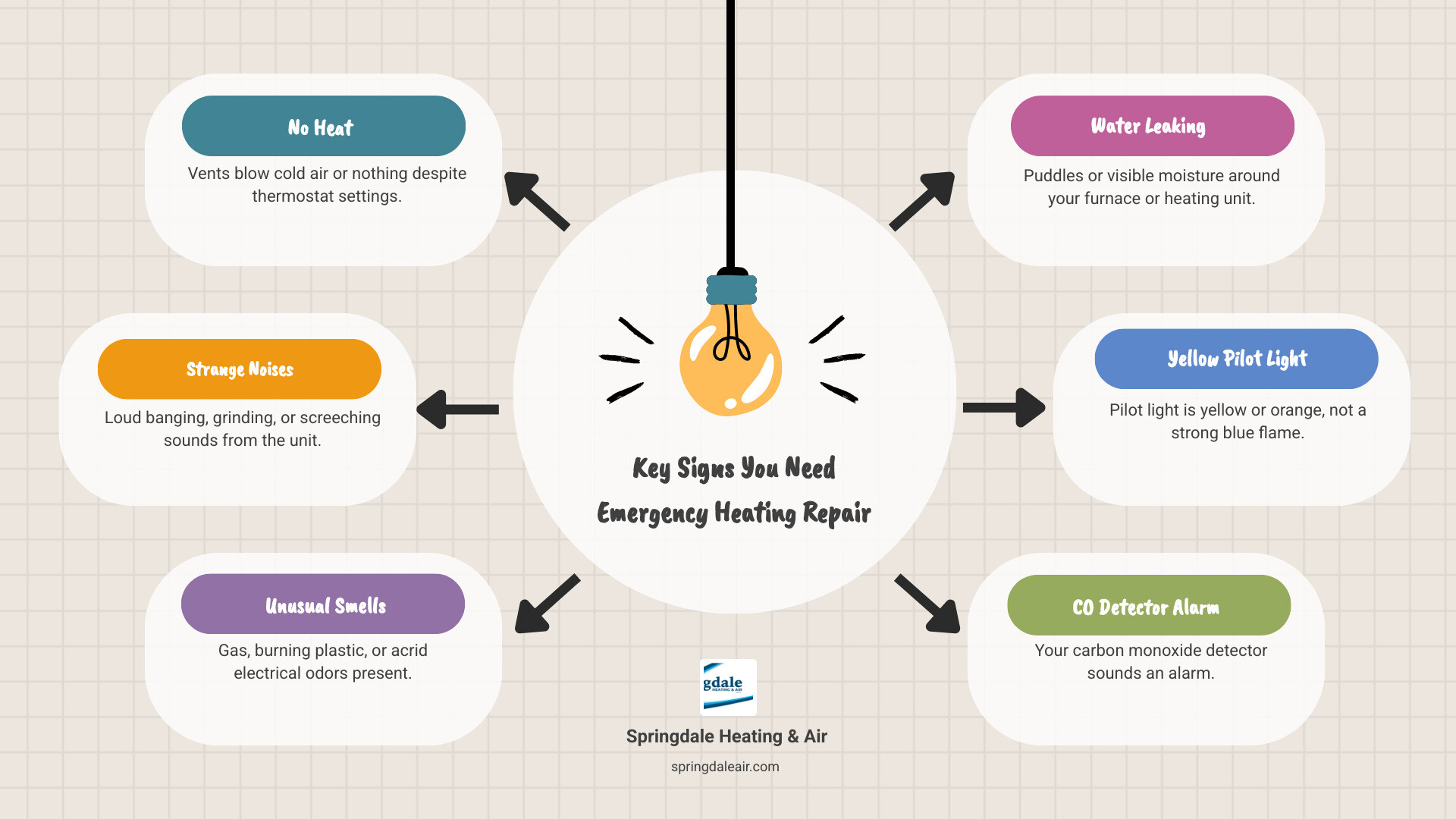
Key Signs You Need Emergency Heating System Repair
Some heating problems require you to act immediately.
No heat is the most obvious red flag. If your thermostat settings are correct but no warm air is flowing, you’re dealing with an emergency heating system repair situation.
Strange noises like grinding, banging, or screeching point to serious mechanical problems that should never be ignored.
Unusual smells are often the most dangerous sign. A rotten egg odor suggests a gas leak—evacuate immediately and call your gas company from outside. A persistent burning smell can indicate overheating components or electrical issues.
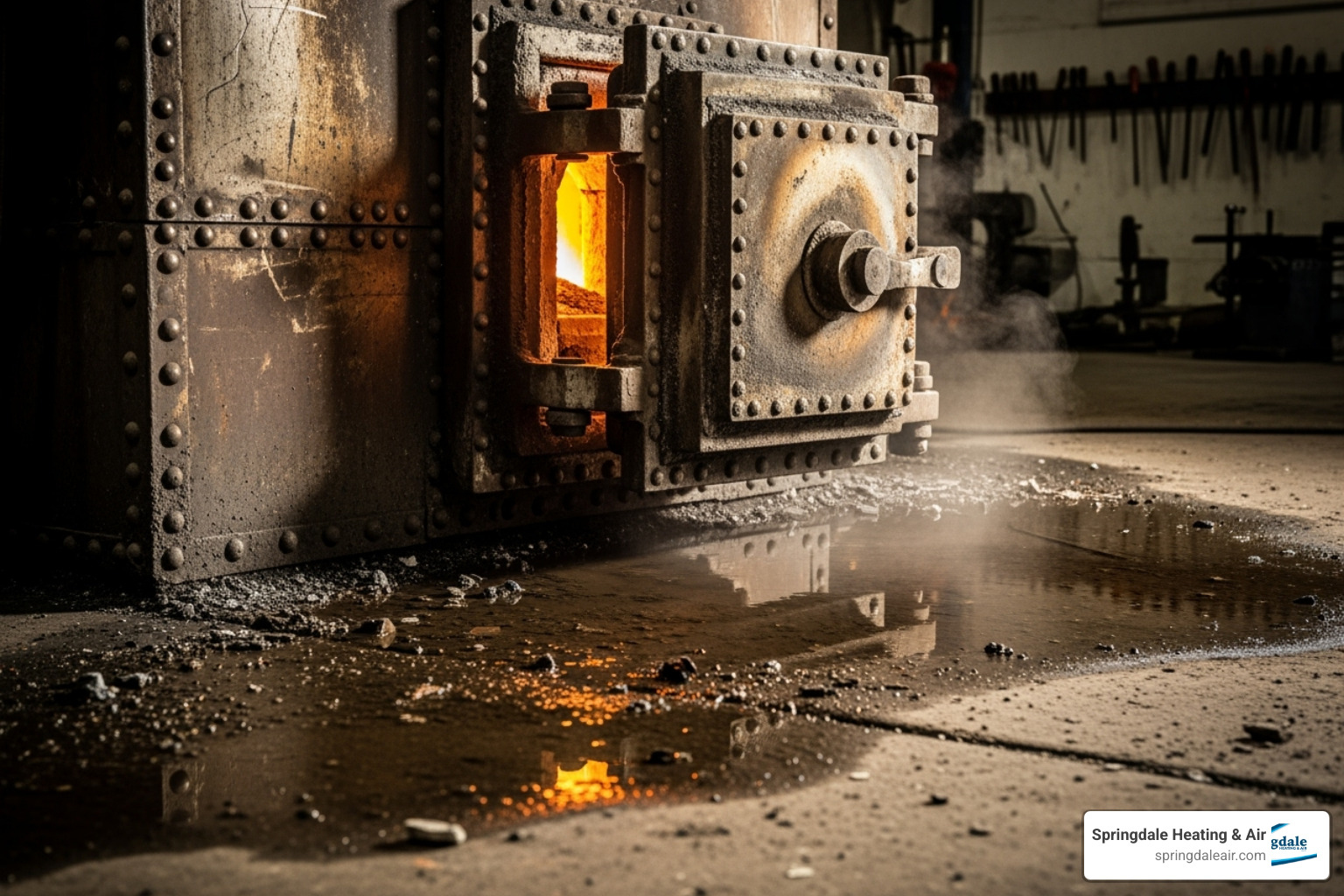
Water leaking in pools around your unit suggests problems like a clogged drain, a compromised heat exchanger, or a frozen coil.
A yellow pilot light on a gas furnace is a serious safety concern. A pilot light should be blue; a yellow or flickering flame indicates incomplete combustion, which produces dangerous carbon monoxide.
If your carbon monoxide detector goes off, treat it as a life-threatening emergency. Get everyone out of the house immediately and call emergency services.
The Risks of Delaying Emergency Heating System Repair
Putting off emergency heating system repair is a gamble that rarely pays off. The longer you wait, the more expensive and dangerous the situation can become.
- Frozen pipes can burst when your heat goes out, causing thousands of dollars in water damage.
- Fire hazards develop when electrical components overheat or gas connections leak.
- Carbon monoxide poisoning is a silent, deadly threat from a malfunctioning furnace. Symptoms include headaches, nausea, and dizziness.
- Complete system failure often results from ignoring early warning signs, leading to a much costlier replacement.
- Health risks from prolonged cold and poor air quality can be serious, especially for children and the elderly.
The bottom line? When your heating system shows emergency signs, waiting isn’t worth the risk. For more information on HVAC safety, you can refer to this resource.
First Steps: What to Do When Your Heater Fails
When your heating system suddenly stops working, it’s easy to panic. But before calling for emergency heating system repair, a few smart first steps can keep you safe and might even solve the problem.
These actions protect your family, may get your heat working again, and help technicians diagnose the issue faster. For more insights, explore our article on Efficient Heating Repair Solutions.
Immediate Safety and Troubleshooting Checks
Safety always comes first. If you smell anything like rotten eggs, you may have a gas leak. Evacuate everyone immediately, avoid using electronics or light switches, and call your gas company from a safe location outside.
For burning smells, electrical issues, or water leaks, shut your system off at both the thermostat and the emergency shut-off switch (usually a red switch near the unit).
Once you’re sure it’s safe, try these simple checks:
- Check your thermostat settings. Make sure it’s set to “Heat” and the fan is on “Auto.”
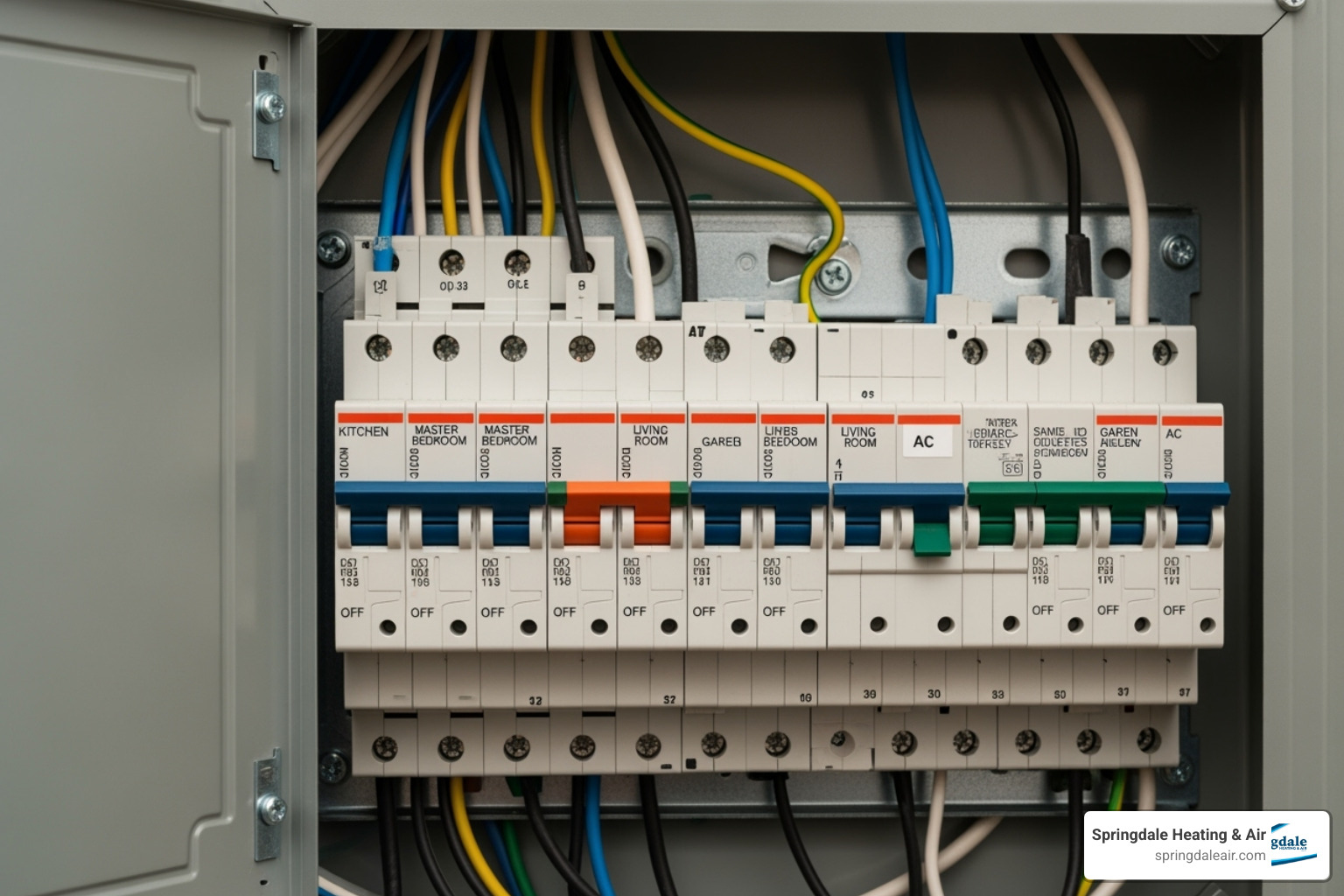
- Check your circuit breaker. Look for a tripped breaker and reset it once. If it trips again, you have an electrical problem that needs a professional.
- Check the air filter. A dirty filter can restrict airflow and cause a shutdown. Replace it if it looks clogged.
- Find the furnace power switch. This switch on or near the unit can sometimes be mistaken for a light switch and turned off accidentally.
- For heat pump owners, clear any snow, ice, or debris from the outdoor unit.
How to Stay Warm Safely While You Wait
While waiting for professional help, use these tips to stay comfortable and safe.
- Layer up with warm clothing, socks, and hats. Use plenty of blankets.
- Close off unused rooms to concentrate any remaining warmth in a central area.
- Block drafts by stuffing towels under doors and around windows.
- Use space heaters with extreme caution. Place them on flat, stable surfaces away from anything flammable, and never leave them unattended.
- Warm up from the inside with hot drinks or soup.
- Never use dangerous heating methods. Gas ovens, charcoal grills, or propane heaters should never be used indoors for warmth due to serious carbon monoxide and fire risks.
How to Choose the Right Emergency Heating System Repair Service
When your heater breaks down on a cold night, you don’t have time to shop around. Knowing what to look for in an emergency heating system repair service ahead of time is crucial.
Not all HVAC companies are created equal. Finding the right balance of speed, skill, and reliability makes all the difference. At Springdale Heating & Air, we’ve been perfecting this balance for over 50 years. For comprehensive service in our area, check out our HVAC Repair Near Cleveland, TN page.
What to Look For in a Technician and Company
When you need help fast, here’s what to look for in a reputable company:
- True 24/7 availability means a real person dispatches a technician anytime, not an answering service that takes a message.
- Licensed and insured status protects you from liability and shows the company meets professional standards.
- NATE-certified technicians have passed rigorous exams proving their expertise. Factory-trained technicians are current on the latest equipment from all major brands.
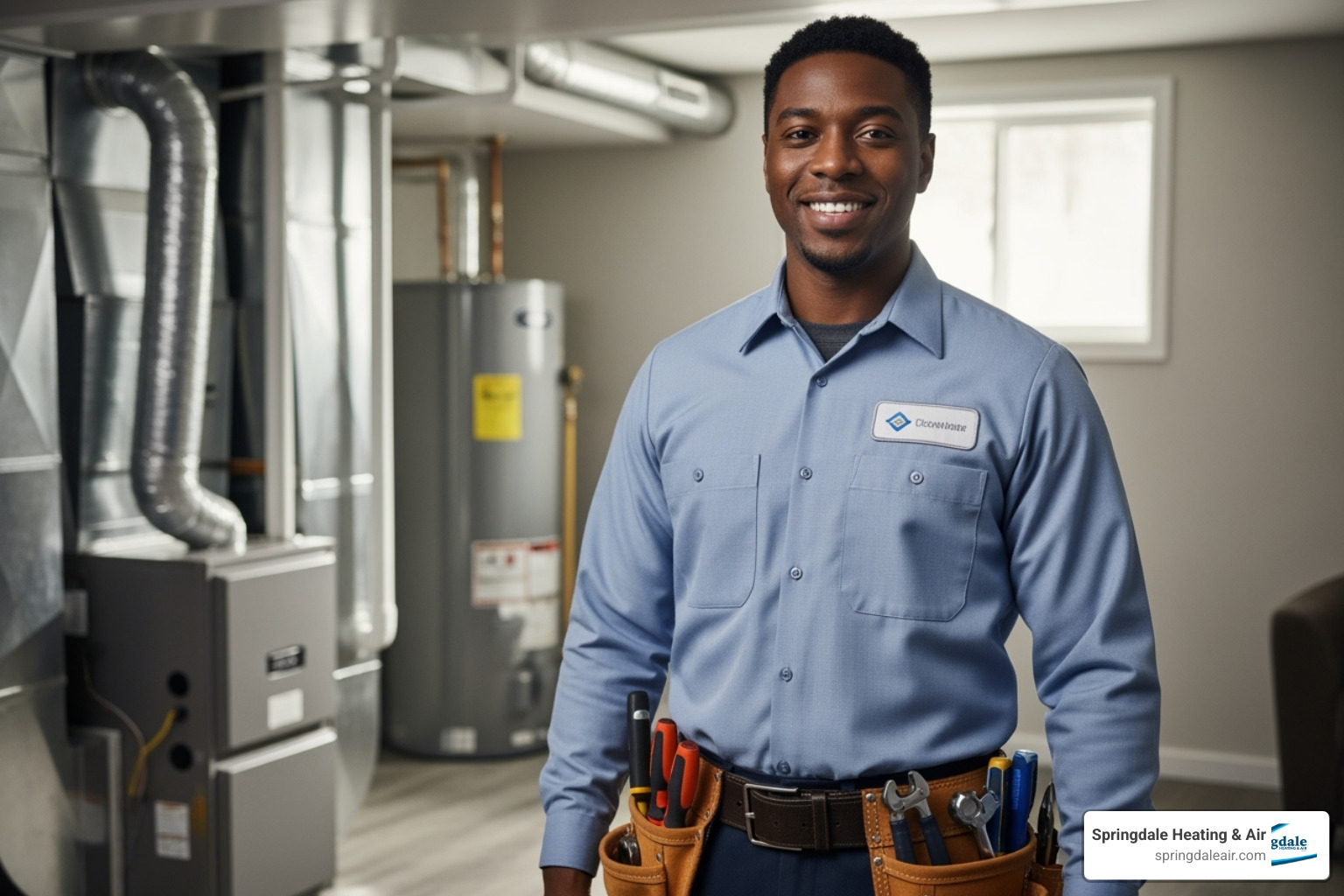
- Years of experience tell a story of reliability. Our 50+ years serving the Cleveland area means we’ve seen it all.
- Positive customer reviews and an A+ Better Business Bureau rating give you real insight into a company’s service quality.
- Transparent pricing means you get a clear, written estimate before work begins, so there are no surprises on the final bill.
- A local service area ensures a company can respond faster than one driving from several counties away.
- Guarantees on work show confidence in their craftsmanship and parts.
- Professionalism appears in the details, like marked vehicles, clean uniforms, and respecting your home.
What to Have Ready When You Call
When you call for emergency heating system repair, having the right information ready helps get a technician to you faster. Prepare the following:
- Your name, address, and a reliable phone number.
- Your heating system’s type (furnace, heat pump), make, and model.
- A specific description of the problem, including any strange sounds, smells, or visible issues.
- Any error codes showing on a digital display.
- A list of troubleshooting steps you’ve already taken (checking the thermostat, filter, etc.).
- Information about any recent maintenance or repairs.
Preventing Future Emergencies with Regular Maintenance
The best emergency heating system repair is the one that never happens. While we’re always ready to help, regular maintenance is your best defense against middle-of-the-night breakdowns.
Think of it like an oil change for your car—your heating system deserves the same care. While unforeseen problems can still occur, consistent maintenance dramatically reduces your chances of a failure. Annual tune-ups are like insurance for your comfort. During these professional inspections, our NATE-certified technicians clean components, check for wear, and spot small problems before they become big, expensive headaches.
Beyond preventing emergencies, regular maintenance extends your system’s lifespan, improves efficiency for lower energy bills, and ensures your family’s safety by checking for gas leaks and carbon monoxide. Plus, many manufacturer warranties require annual maintenance to remain valid.
For comprehensive care, explore our HVAC Services in Cleveland, TN to keep your system running smoothly year-round.
The Value of a Maintenance Plan
A maintenance plan offers incredible peace of mind. Members get priority service if an emergency does happen—you move to the front of the line. Plans also provide discounted repairs, rewarding you for investing in preventive care. The real value is in consistent performance and knowing that certified professionals are catching small problems early.
Typical Costs for Emergency Repairs
When you’re facing an emergency, cost is a natural concern. Understanding the factors involved helps you prepare.
- Diagnostic fees cover the technician’s time to identify the problem.
- After-hours fees are standard for weekend, holiday, or late-night service.
- Parts and labor make up the bulk of the cost and depend on the complexity of the fix.
Sometimes, you may face a repair vs. replacement decision. If repair costs are high for an older system, replacement might be the smarter long-term choice. Our technicians will provide an honest assessment to help you decide what’s best for your budget.
Frequently Asked Questions about Emergency Heating Repair
When you’re dealing with a heating emergency, questions are inevitable. As a company with over 50 years of experience serving families in Cleveland and Athens, TN, we’ve heard them all.
Here are the most common questions we receive during a heating crisis.
Why do heating systems always seem to break down at the worst time?
It’s not your imagination. Systems are under the most strain during cold snaps, causing aging or poorly maintained components to fail when they’re working their hardest. This constant pressure is often the final straw for parts that were already close to breaking.
Is a furnace making a loud noise a real emergency?
Yes. Loud banging, screeching, or grinding indicates a serious mechanical failure, like a broken blower motor or loose parts. These sounds mean you should shut the system off immediately and call for emergency heating system repair to prevent a simple fix from turning into a complete system replacement.
How much does an emergency heating repair call typically cost?
Costs vary based on the time of day, the complexity of the repair, and the parts needed. Expect to pay a premium for after-hours, weekend, or holiday service, in addition to a diagnostic fee and the cost of the actual repair. Our team provides clear, written estimates before any work begins, so you’ll know the exact cost and can make an informed decision. We’ll also give you honest advice if replacement is a more cost-effective option.
Your Trusted Partner for Heating Emergencies in Cleveland and Athens, TN
When your heating system fails in the middle of a cold Tennessee night, you need a team that answers the phone, shows up fast, and fixes the problem right the first time. For over 50 years, Springdale Heating & Air has been that trusted partner for families across East Tennessee.
Our commitment is simple: honest service, reliable technicians, and affordable solutions to restore your comfort and peace of mind. Our NATE-certified and factory-trained technicians serve communities throughout Cleveland, Chattanooga, Ooltewah, Athens, and the surrounding areas. With an A+ BBB rating, we treat every home like our own.
Our true 24/7 emergency service means we’re always ready to help—no answering services, just real people ready when heating emergencies strike.
Whether you need an emergency fix in Heating Repair in Athens, TN, a heat pump problem solved in Heating Repair in Collegedale, TN, or a crisis handled in Heating Repair in East Brainerd, TN, we’re the team your neighbors trust.
For all your heating and cooling services in Cleveland, TN, you’ll be glad you have our number. Contact Springdale Heating & Air—your trusted partner for keeping East Tennessee families warm and comfortable.