



How to Choose AC Unit for Your Home
Choosing the right AC unit means calculating proper BTU capacity based on your home’s square footage, checking SEER ratings for efficiency, and talking it through with us here at Springdale Heating & Air in Cleveland, TN. Our five-person team evaluates your home’s size, insulation, and budget to recommend a unit that delivers optimal cooling performance and long-term energy savings.
Correct sizing determines comfort and efficiency: measure your home’s square footage first, then match capacity to that space—avoiding units that are too large or too small. As a five-person team based in Cleveland, TN, we recommend a professional load calculation before purchase to ensure reliable, long-lasting performance.
Choosing the right AC unit depends on proper sizing, not just budget or brand reputation. An undersized system runs constantly and raises utility bills, while an oversized one wastes energy and wears out faster. We recommend having a load calculation performed, comparing efficiency ratings, and reviewing reliability data, such as long-term member surveys, before deciding.
Key Takeaways
- Proper AC unit sizing directly impacts year-round comfort, energy efficiency, and equipment lifespan for your home. When we get the sizing calculation right from the start, your system runs efficiently and lasts the years it’s built for.
- Reliability data from regular member surveys helps identify which central air systems tend to last longest. We use this information to steer homeowners away from equipment with a known history of early failure.
- Choosing an oversized or undersized system creates drawbacks affecting performance and operational costs significantly. Either mistake shortens equipment life and adds unnecessary strain on every component.
- Evaluate cooling capacity and room square footage when comparing portable, window, or central AC options. Matching these figures correctly is the single biggest factor in whether a unit performs well in your home.
What Will You Accomplish Choosing an AC Unit?
Choosing an AC unit correctly means avoiding a costly mistake and securing years of reliable comfort. Central air conditioning purchases represent a major household expense. Survey data covering more than 13,000 units shows that roughly 19 percent of central AC systems bought between 2009 and 2024 developed problems. We’re based in Cleveland, TN, and we help homeowners here avoid that outcome from the start.
We follow a clear process when we guide a household through unit selection:
- Evaluate the home’s square footage and layout to determine cooling needs. We walk every room to confirm measurements rather than relying on a rough guess.
- Review AC sizing requirements so the unit matches the space instead of over- or under-cooling it. This step alone prevents most of the comfort complaints we see later.
- Compare efficiency ratings and features against household budget priorities. We lay out the tradeoffs plainly so you can weigh long-term savings against upfront investment.
- Recommend a system built for long-term reliability rather than the lowest upfront number. Our recommendation always reflects what performs well for years, not just what looks cheapest today.
- Schedule HVAC installation with technicians who understand local homes and climate conditions. That familiarity helps the crew anticipate issues before they slow down the job.
Because we operate as a team of five, every homeowner gets direct, personalized guidance rather than a rushed sales pitch. That smaller structure means the same familiar faces walk you through sizing questions, efficiency comparisons, and installation scheduling from start to finish.
Why does correct sizing matter so much?
Sizing determines whether a system cools evenly or struggles constantly. An undersized or oversized unit strains components, drives up utility bills, and shortens the equipment’s working life. Getting sizing right the first time protects the investment a new system represents.
How does location affect the AC decision?
Local climate and home construction in the Cleveland, TN area influence which unit performs best. Our presence in Cleveland, TN gives you a nearby resource familiar with regional conditions, rather than a distant call center guessing at local needs. That proximity shapes every recommendation we make, from unit type to installation timing.
What Are the Main Types of AC Units?
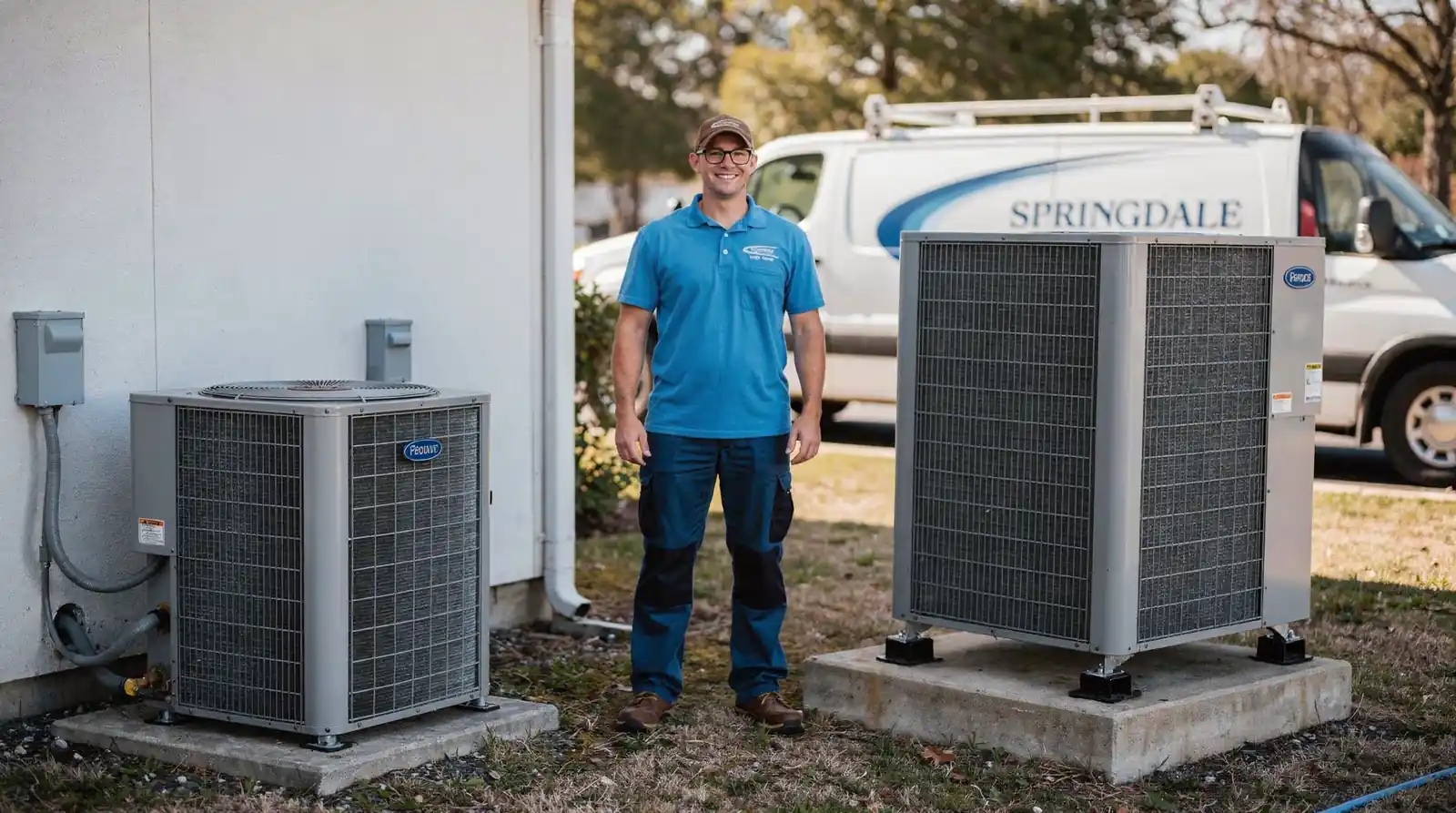
Central air conditioning splits into two main categories: split systems and package systems. Split systems separate components between an indoor air handler and an outdoor condenser, while package systems house every component in one outdoor cabinet. We find that homeowners who understand these differences make a smarter, more confident choice when they choose an AC unit for a new install or replacement.
Split systems dominate residential neighborhoods for good reason. The outdoor unit contains the compressor and condenser coils, pulling heat from refrigerant and releasing it outside. Indoors, the air handler holds evaporator coils and a blower fan that circulates cooled air through the ductwork. This two-part design gives our team flexibility when planning HVAC installation around existing duct layouts and mechanical closets.
Package systems take a different approach. All components sit together in a single outdoor cabinet, which suits homes without space for an indoor air handler, such as properties with minimal attic clearance. We often recommend package systems for smaller lots where outdoor equipment needs to stay compact and consolidated.
Which System Fits My Home Better?
The right fit depends on available space, existing ductwork, and roof or yard layout. Homes with attics or basements typically suit split systems, while compact properties often benefit from package units.
Does Unit Type Affect AC Sizing?
Unit type shapes how we calculate AC sizing for a home. Cooling capacity must match square footage regardless of split or package configuration. Our technicians evaluate both room size and climate demands before recommending equipment. Portable and window units follow the same principle on a smaller scale, weighing cooling capacity against the space each unit needs to serve.
How Do You Calculate the Right AC Sizing?
Correct AC sizing starts with matching cooling capacity to a home’s square footage, layout, and insulation quality. Getting this wrong affects year-round comfort, drives up energy bills, and shortens the lifespan of the whole system. Our Cleveland, TN-based team walks every homeowner through this evaluation before recommending equipment.
We follow a consistent process when we help you choose an AC unit sized correctly for your home:
- Measure total square footage of the conditioned space, room by room. We record every room individually so nothing gets missed in the final calculation.
- Note ceiling height, window placement, and insulation condition, since these change how much heat a home gains or loses. Two homes with identical square footage can need very different equipment once these factors are considered.
- Account for local climate and sun exposure on the home’s exterior walls. Homes facing direct afternoon sun often need extra cooling capacity to keep pace with that added heat.
- Calculate the cooling load needed to offset that heat gain. This figure becomes the baseline we use to match equipment rather than guessing at a size.
- Match the calculation to available equipment capacity before finalizing HVAC installation plans. We confirm the numbers line up before any equipment gets ordered or scheduled.
Skipping steps in this process creates real problems. An undersized unit runs constantly, struggles to reach the thermostat setting, and pushes utility bills higher month after month. An oversized unit cools the room quickly, then shuts off — only to kick back on minutes later. That short-cycling wastes energy and puts unnecessary wear on the compressor over time.
What happens if my AC unit is the wrong size?
A mismatched system either overworks itself trying to keep up or shuts off before finishing a proper cooling cycle. Both scenarios raise energy costs and shorten how long the equipment lasts. Neither outcome delivers the steady, even comfort a properly sized system provides.
Can I estimate AC size myself before calling a professional?
You can start with square footage as a rough baseline. Insulation, window count, and layout all shift the actual load. Our team reviews these details on-site before recommending a unit size, ensuring the recommendation reflects your home’s real cooling needs rather than a generic estimate.
Which Central Air System Type Fits Your Home?
Split systems answer that question for most homeowners. They represent the most common central air setup found in homes today. A split system divides equipment between an outdoor condenser and an indoor air handler, each with a distinct job in the cooling process.
The outdoor condenser unit houses a compressor that pumps refrigerant to absorb heat and humidity pulled from inside the house. That refrigerant then travels to the indoor air handler, where evaporator coils remove heat from indoor air, leaving it cool before a blower pushes it through the ductwork. Understanding this division of labor matters when homeowners choose an AC unit for a replacement or new installation.
To narrow down the right fit, we recommend working through these steps before signing off on any equipment:
- Confirm whether existing ductwork can support a split system or whether a ductless or package alternative makes more sense.
- Compare AC sizing requirements against square footage, ceiling height, and insulation quality.
- Review outdoor space and clearance for the condenser unit.
- Discuss HVAC installation timelines and access requirements with a licensed technician before committing.
How do I know if a split system is right for my house?
Most homes with existing ductwork already accommodate a split system without major structural changes. Homeowners without ducts typically need a different configuration, which a hands-on evaluation will confirm.
Can a small HVAC team still handle a full system comparison?
Yes. Our compact, five-person team, based in Cleveland, TN, provides direct, hands-on guidance when you weigh split versus package system options, walking through each component before any decision gets made.
What Features Should You Compare Before Buying?
Comparing features before purchase means weighing thermostat controls, cooling capacity, and total budget together, not separately. Homeowners who choose an AC unit based on price alone often discover higher energy bills or mismatched comfort later. We recommend a structured comparison covering four areas: convenience features, climate demands, budget, and energy use.
Before comparing models, we ask every homeowner to rank which features matter most. Programmable thermostats, air purifiers, and other add-ons change the final selection significantly. Once priorities are clear, the comparison moves faster and produces a better match for the home.
Does climate affect which AC unit I should choose?
Yes — homes in hot, humid regions often need a larger unit with higher cooling capacity to keep pace with demand. Standard units in these climates work harder, run longer, and wear out faster, so we factor local climate into every AC sizing recommendation we make.
Do I need to budget for more than the unit itself?
Yes — professional HVAC installation deserves its own line in the budget, separate from the unit’s upfront investment. Higher-quality air conditioners typically require more initial investment, and installation adds to that total, so skipping this step can lead to unpleasant surprises once the paperwork is signed.
Before finalizing a decision, we walk homeowners through this comparison checklist:
- Comfort features – thermostats, filtration, humidity control
- Climate fit – cooling capacity matched to regional heat and humidity
- Total budget – equipment plus professional installation
- Energy use – consumption levels and efficiency ratings
Air conditioners consume substantial energy over a cooling season, so we treat energy-conscious models as a core comparison point, not an afterthought. Weighing these four factors together protects comfort, protects your budget, and protects the equipment’s lifespan for years of dependable operation.
How Do You Choose a Window AC Unit?
We evaluate a window AC unit by matching its cooling mode, control features, and energy settings to the specific room we need to cool. A window air conditioner cools a single room efficiently. It works as a simpler, faster alternative when we don’t need to choose an AC unit system built for whole-house comfort. For homeowners weighing a quick fix against a larger project, understanding these settings matters before we commit to a purchase.
We recommend the following steps when we shop for a window unit:
- Confirm the room only needs single-space cooling, not whole-house coverage.
- Check that the cooling mode lowers both temperature and humidity, then recirculates air through a built-in fan.
- Look for a model that lets us set a target temperature, since the unit’s sensor maintains that temperature automatically without constant adjustment.
- Ask about a fan-only mode, which uses less energy because it skips the cooling components entirely and simply moves air.
- Compare warranty and installation requirements before purchase.
Does a Window Unit Replace Central Air?
A window unit does not replace central air conditioning in homes that need consistent cooling across multiple rooms. We view window units as targeted solutions for single spaces. Whole-house comfort still depends on proper AC sizing and a correctly matched central system.
When Should We Call a Professional Instead?
We suggest calling in professional support once cooling needs expand beyond one or two rooms. At that point, HVAC installation of a central system becomes the more reliable, longer-term investment, and we walk you through that decision with clear, honest guidance.
Why Does Professional HVAC Installation Matter?
Professional HVAC installation determines how well a new air conditioner performs for years to come. A poorly installed system wastes energy, breaks down early, and leaves homeowners paying twice—once for the unit and again for repairs.
Selecting the wrong company for AC repair in the Cleveland, TN area turns a straightforward project into an expensive, frustrating ordeal. Skipping proper AC sizing, rushing the installation, or hiring an unqualified crew often causes these problems down the road. That’s why the installer matters just as much as the equipment itself.
Our licensed team at Springdale Heating & Air brings the skills, knowledge, and hands-on experience needed to handle heating and cooling issues with speed and precision. Every job, from a single repair to a full system swap, draws on that same level of expertise, so you gain a partner who diagnoses problems accurately and installs equipment correctly the first time.
Local roots reinforce that reliability. We’ve called Cleveland, TN home for over a decade, building know-how specific to the region’s climate and housing stock. That longevity reflects consistent, trustworthy service rather than a short-term operation.
Does the Cost of a New AC Unit Include Installation?
Yes — professional installation is part of the total investment, not a separate afterthought. We always encourage homeowners to factor installation into their budget when they choose an AC unit, since the equipment price alone doesn’t reflect the full picture.
What Happens If HVAC Installation Is Done Incorrectly?
Incorrect installation creates problems that surface quickly and worsen over time. Common consequences include:
- Reduced energy efficiency and higher utility bills
- Uneven cooling throughout the home
- Premature equipment wear and shortened lifespan
- Increased frequency of repair calls
Avoiding these outcomes starts with hiring an experienced, licensed team from the beginning. A properly sized, correctly installed system protects the investment and keeps indoor comfort consistent through every season.
What Common Mistakes Should You Avoid?
You can lose money and comfort by rushing the process to choose an AC unit without proper planning. Four mistakes account for most of the frustration we see across Cleveland, TN homes: skipping measurements, ignoring reliability data, hiring an unfamiliar large provider, and neglecting an experienced local installer. Avoiding each one protects both your home’s comfort and your household budget.
Mistake 1: Skipping the square footage measurement. Correct AC sizing starts with knowing exactly how much space needs cooling. Skip this step, and the new system runs either too large or too small for the home, driving up utility bills and leaving rooms unevenly cooled.
Mistake 2: Ignoring long-term reliability data. Reliability tracking over extended periods, gathered through regular member surveys, exists precisely because some units fail sooner than others. Buying blind raises the risk of a premature breakdown and an unplanned repair call.
Mistake 3: Choosing an unfamiliar large provider over a dedicated local team. Our five-person team, based right here in Cleveland, TN, offers hands-on guidance that a distant call center cannot match. A smaller, local crew knows the housing stock, the climate swings, and the ductwork quirks specific to this region.
Mistake 4: Overlooking the value of experienced hands during HVAC installation. The wrong company for AC repair in the Cleveland, TN area turns a simple project into an expensive, frustrating ordeal.
How Do We Avoid Sizing Errors Before Buying?
- Measure total square footage of the home, room by room.
- Account for ceiling height, insulation quality, and window exposure.
- Match those figures against unit capacity before making a final decision.
Why Does Local Experience Matter More Than Company Size?
Our local team understands regional humidity patterns, older duct systems, and permitting requirements specific to Cleveland, TN. That familiarity translates into fewer callbacks and a smoother installation from day one.
Ready to Choose the Right AC Unit for Your Home?
Choosing the right AC unit comes down to careful attention to your home’s needs, your budget, and the realities of your specific space. When we weigh efficiency ratings, sizing requirements, and long-term operating costs together, we help you make an informed decision that delivers comfort and reliability for years to come. Our licensed and certified team is ready to walk you through every step, from that first sizing conversation to the final installation, so your new system performs at its best from day one. Reach out to us whenever you’re ready to get started — we’re glad to help.
FAQ
How do I determine the right AC unit size for my home?
We recommend measuring your home’s square footage and layout, then having a professional load calculation performed. This matches cooling capacity to your space and helps you avoid units that are too large or too small.
What happens if I choose the wrong size AC unit?
An undersized system runs constantly and raises utility bills, while an oversized unit wastes energy and wears out faster. Both scenarios strain components and shorten the equipment’s working life.
Why work with Springdale Heating & Air for AC selection?
As a five-person team based in Cleveland, TN, we provide direct, personalized guidance and know the local Cleveland, TN climate conditions inside and out. The same familiar faces guide you through sizing, efficiency comparisons, and installation.